

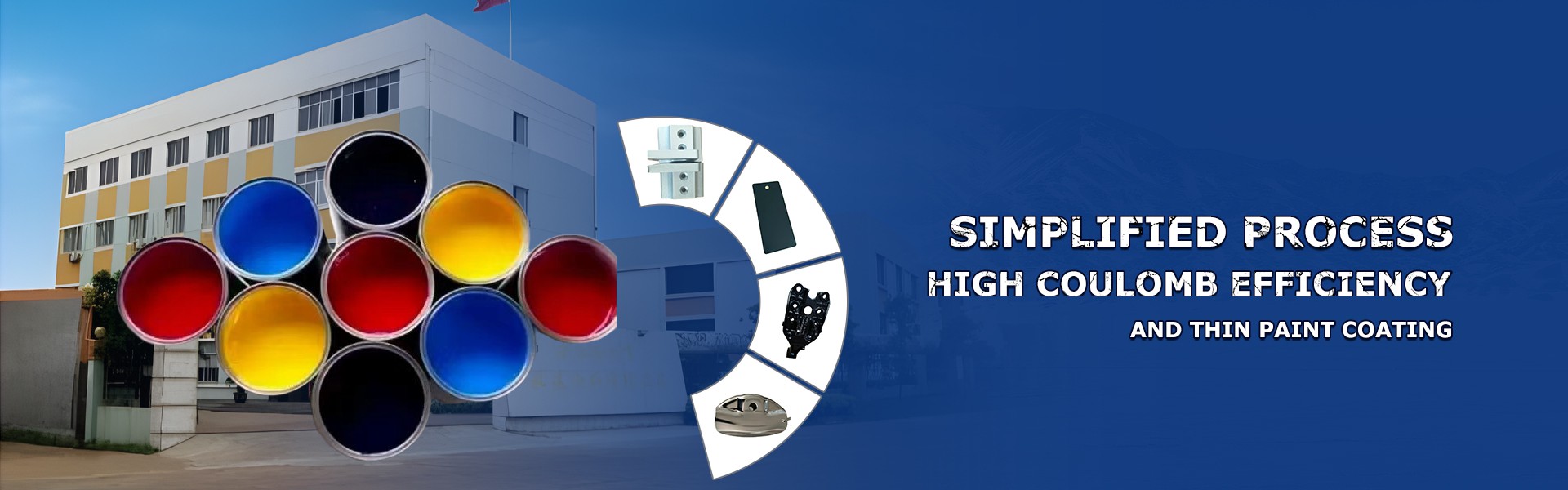
What Are Electrophoretic Coatings?
Electrophoretic coating, also known as E-Coat, electrocoat, or electrodeposition coating, is a water-based coating system applied by electrically depositing charged coating particles onto conductive metal substrates.
Unlike conventional spray coating, electrodeposition allows coating material to reach recessed areas, internal surfaces, edges, and complex geometries that can be difficult to cover uniformly with conventional application methods.
-
![Aluminum Profile Electrophoretic Coating]() Aluminum Profile Electrophoretic CoatingAluminum profile electrophoretic coating is a special electrophoretic coating product customized and developed by us for aluminum and aluminum alloy profiles. The resin adhesion system is optimized
Aluminum Profile Electrophoretic CoatingAluminum profile electrophoretic coating is a special electrophoretic coating product customized and developed by us for aluminum and aluminum alloy profiles. The resin adhesion system is optimized -
![Green Water Based Paint]() Green Water Based PaintOur green water based paint (CJ-11 two-component cathodic electrophoretic paint green version) is a color water-based electrophoretic coating customized for the global environmental protection
Green Water Based PaintOur green water based paint (CJ-11 two-component cathodic electrophoretic paint green version) is a color water-based electrophoretic coating customized for the global environmental protection -
![2K Water Based Paint]() 2K Water Based PaintOur 2k water based paint (CJ-11 two-component cathodic electrophoretic paint) is a high-performance water-based coating scientifically compounded from modified epoxy resin, pigments, fillers and
2K Water Based PaintOur 2k water based paint (CJ-11 two-component cathodic electrophoretic paint) is a high-performance water-based coating scientifically compounded from modified epoxy resin, pigments, fillers and -
![Electrophoretic Painting]() Electrophoretic PaintingGreat adhesion does more than just hold the paint on. It also improves rust protection. A coating that sticks well blocks water and oxygen from moving sideways under the film. Even if the film is
Electrophoretic PaintingGreat adhesion does more than just hold the paint on. It also improves rust protection. A coating that sticks well blocks water and oxygen from moving sideways under the film. Even if the film is -
![Electrodeposited Coatings]() Electrodeposited CoatingsWith traditional spray, the thickness depends on the worker's hand. It can be uneven. But this process is controlled by electricity. As the film gets thicker, it acts as a resistor. The deposition
Electrodeposited CoatingsWith traditional spray, the thickness depends on the worker's hand. It can be uneven. But this process is controlled by electricity. As the film gets thicker, it acts as a resistor. The deposition -
![Cathodic Electrodeposition Paint]() Cathodic Electrodeposition PaintThis product is not just high-performing. It also helps with your energy cost. The baking window is wide. It cures fully between 160°C and 180°C. This is 10-20°C lower than traditional products. Do
Cathodic Electrodeposition PaintThis product is not just high-performing. It also helps with your energy cost. The baking window is wide. It cures fully between 160°C and 180°C. This is 10-20°C lower than traditional products. Do -
![Wear Resistant Electrophoretic Coating]() Wear Resistant Electrophoretic CoatingDeveloped based on our 16 years of R&D experience in cathodic electrophoretic coatings, this wear resistant electrophoretic coating is a high-hardness, wear-resistant electrophoretic product tailored
Wear Resistant Electrophoretic CoatingDeveloped based on our 16 years of R&D experience in cathodic electrophoretic coatings, this wear resistant electrophoretic coating is a high-hardness, wear-resistant electrophoretic product tailored -
![Waterborne Cathodic E-Coat]() Waterborne Cathodic E-CoatWaterborne cathodic e-coat is our core product series focusing on environmental protection. It uses water as the main dispersion medium, which greatly reduces the content of organic solvents and
Waterborne Cathodic E-CoatWaterborne cathodic e-coat is our core product series focusing on environmental protection. It uses water as the main dispersion medium, which greatly reduces the content of organic solvents and -
![Color Electrophoretic Coating]() Color Electrophoretic CoatingColor electrophoretic coating is our characteristic electrophoretic product series that combines decoration and protection. It breaks the color limitation of traditional electrophoretic paints which
Color Electrophoretic CoatingColor electrophoretic coating is our characteristic electrophoretic product series that combines decoration and protection. It breaks the color limitation of traditional electrophoretic paints which -
![Anti-Corrosion Electrophoretic Coating]() Anti-Corrosion Electrophoretic CoatingAnti-corrosion electrophoretic coating is a high-performance cathodic electrophoretic product developed by us for heavy corrosion working conditions. Based on 16 years of technical accumulation in
Anti-Corrosion Electrophoretic CoatingAnti-corrosion electrophoretic coating is a high-performance cathodic electrophoretic product developed by us for heavy corrosion working conditions. Based on 16 years of technical accumulation in -
![Matte Electrophoretic Paint]() Matte Electrophoretic Paintfocusing on low-gloss decorative effect. Through the design of special matting resin and pigment-filler system, it can form a delicate and uniform matte coating film on the workpiece surface, with
Matte Electrophoretic Paintfocusing on low-gloss decorative effect. Through the design of special matting resin and pigment-filler system, it can form a delicate and uniform matte coating film on the workpiece surface, with -
![High Gloss Electrodeposition Paint]() High Gloss Electrodeposition Painthigh decoration. Through a high-gloss resin system and precise pigment dispersion process, it can form a mirror-level high-brightness coating film on the surface of metal workpieces, with full and
High Gloss Electrodeposition Painthigh decoration. Through a high-gloss resin system and precise pigment dispersion process, it can form a mirror-level high-brightness coating film on the surface of metal workpieces, with full and


Cathodic Electrophoretic Coatings
Cathodic E-Coat is widely used where maximum corrosion protection and consistent coating coverage are major requirements. The system is deposited on the cathodic workpiece during the electrocoating process, offering controlled film build, corrosion resistance, and compatibility with subsequent topcoat layers.
Anodic Electrophoretic Coatings
Anodic E-Coat systems use a different electrochemical deposition mechanism and resin chemistry. They can be suitable for selected steel, iron, cast iron, aluminum, furniture, appliance, and general industrial applications, depending on the formulation and pretreatment requirements.
Major Industrial Applications
Automotive Components:
Brackets, structural elements, chassis parts, housings, and stampings requiring robust primer protection.
01
Industrial Machinery:
Machine frames, metal housings, equipment components, and fabricated assemblies.
02
Agricultural and Construction Equipment:
Heavy-duty structural parts, brackets, enclosures, and components exposed to harsh exterior environments.
03
Electrical Enclosures:
Conductive metal housings requiring uniform edge coverage and long-term corrosion prevention.
04
Appliances and Metal Products:
Metal cabinets, radiators, appliance components, and interior metal assemblies.
05
Frequently Asked Questions
We're well-known as one of the leading electrophoretic coatings manufacturers and suppliers in China, featured by quality products and low price. Please rest assured to buy discount electrophoretic coatings from our factory. We also accept customized orders.
Cathodic Electrophoretic Coating, Electrodeposition Paint, Electrophoresis PaintingPopular Products


