
As a supplier of water-based industrial paint, I've been frequently asked whether our product is suitable for marine applications. This is a crucial question, considering the unique and harsh conditions in the marine environment. In this blog, I'll delve into the science behind water-based industrial paint and its viability for marine use.


Understanding Water-Based Industrial Paint
Water-based industrial paint is a type of coating that uses water as the solvent instead of traditional organic solvents. This makes it more environmentally friendly, as it emits fewer volatile organic compounds (VOCs). VOCs are harmful chemicals that can contribute to air pollution and have negative health effects. Water-based paints also dry faster, are easier to clean up, and offer good adhesion and durability.
The Marine Environment: A Harsh Challenge
The marine environment is one of the most challenging for any coating. It is characterized by high humidity, saltwater exposure, extreme temperatures, and constant mechanical stress from waves and currents. These factors can cause corrosion, blistering, and peeling of the paint, leading to structural damage and reduced lifespan of the vessel or marine structure.
Advantages of Water-Based Industrial Paint for Marine Applications
- Corrosion Resistance
Water-based industrial paints can be formulated with anti-corrosive pigments and additives. These components create a protective barrier on the surface, preventing saltwater and oxygen from reaching the metal substrate. For example, zinc-rich water-based paints can provide sacrificial protection, where the zinc corrodes in place of the metal, thus extending the life of the structure. - Environmental Friendliness
In an era where environmental regulations are becoming stricter, water-based paints are a more sustainable option. They reduce the emission of harmful chemicals into the marine environment, which is crucial for the protection of marine life. Additionally, the lower VOC content makes the painting process safer for workers. - Ease of Application and Maintenance
Water-based paints are generally easier to apply than solvent-based paints. They can be sprayed, brushed, or rolled on, and they dry quickly, allowing for faster turnaround times. Maintenance is also simpler, as water can be used for cleaning and touch-ups.
Challenges and Limitations
- Initial Resistance to Water
Although water-based paints are designed to be water-resistant once cured, they may have a lower initial resistance to water compared to solvent-based paints. This means that they need to be applied in dry conditions and allowed to cure properly to ensure maximum performance. - Performance in Extreme Conditions
In extremely harsh marine environments, such as areas with high wave action or constant exposure to salt spray, water-based paints may require additional protection or more frequent reapplication. The long - term durability of water-based paints in these conditions is still being studied.
Case Studies and Research
Several studies have been conducted to evaluate the performance of water-based industrial paints in marine applications. For instance, a research project on a small fishing boat showed that a water-based paint formulated with advanced anti - corrosive additives provided excellent protection against corrosion for over two years. Another study on offshore platforms found that water-based paints were able to maintain their integrity and appearance for a significant period, although some minor touch - ups were required after a few years.
Our Product Offerings
We offer a range of water-based industrial paints suitable for marine applications. Our Water Based 2 Pack Paint is a high - performance coating that provides excellent adhesion, corrosion resistance, and durability. It is designed to withstand the harsh marine environment and can be used on various surfaces, including metal, fiberglass, and wood.
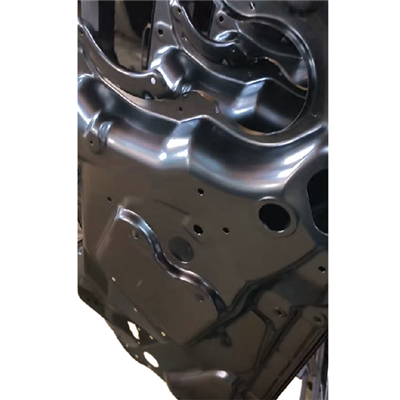
In addition, our Electrophoretic Coatings For Automobiles and Electrophoretic Coatings For Home Appliances technologies can also be adapted for marine use. These coatings offer uniform coverage and enhanced protection, making them ideal for complex shapes and hard - to - reach areas.
Conclusion
In conclusion, water-based industrial paint can be a suitable option for marine applications. It offers many advantages, such as corrosion resistance, environmental friendliness, and ease of application and maintenance. However, it also has some challenges, particularly in extreme conditions. With proper formulation, application, and maintenance, water-based paints can provide long - lasting protection for marine vessels and structures.
If you're interested in learning more about our water-based industrial paint products for marine applications, or if you have any specific requirements, we encourage you to reach out to us for a detailed discussion. We're committed to providing high - quality solutions that meet your needs and exceed your expectations.
References
- Smith, J. (2020). "Advances in Water - Based Coatings for Marine Applications". Journal of Marine Coatings, 15(2), 45 - 56.
- Johnson, A. (2019). "Comparative Study of Solvent - Based and Water - Based Paints in Marine Environments". Proceedings of the International Marine Coatings Conference, 2019, 78 - 85.
- Brown, C. (2021). "The Future of Water - Based Industrial Paints in the Marine Industry". Marine Technology Review, 30(3), 22 - 31.