
What is the anti - corrosion property of water borne coating?
As a supplier of water borne coatings, I've witnessed firsthand the growing demand for these environmentally friendly and high - performance solutions. Water borne coatings have become a popular choice in various industries, and their anti - corrosion properties are a key factor in their widespread use.
Understanding Water Borne Coatings
Water borne coatings are paints or coatings that use water as a solvent instead of traditional organic solvents. This not only makes them more environmentally friendly but also offers several advantages in terms of application and performance. The basic components of water borne coatings typically include resins, pigments, additives, and water. The resins play a crucial role in determining the coating's properties, such as adhesion, flexibility, and anti - corrosion ability.
Mechanisms of Anti - Corrosion in Water Borne Coatings
Barrier Protection
One of the primary ways water borne coatings prevent corrosion is by acting as a physical barrier between the metal substrate and the surrounding environment. When applied to a metal surface, the coating forms a continuous film that blocks oxygen, water, and other corrosive agents from reaching the metal. This is similar to how a shield protects a knight in battle. For example, in the case of a steel bridge, a water borne coating can prevent rust from forming by preventing water and oxygen from coming into contact with the steel.
The effectiveness of the barrier protection depends on the quality of the coating film. A well - applied and high - quality water borne coating will have a dense and uniform structure, which provides better protection. The thickness of the coating also plays a role; generally, a thicker coating offers more effective barrier protection.
Inhibitive Action
Some water borne coatings contain corrosion inhibitors. These inhibitors work by either reacting with the metal surface to form a protective layer or by interfering with the corrosion process at the molecular level. For instance, certain inhibitors can react with metal ions to form a passive film on the metal surface, which reduces the rate of corrosion. This is like adding a chemical bodyguard to the metal, which defends it against corrosive attacks.
Cathodic Protection
In some cases, water borne coatings can provide cathodic protection. This is achieved by incorporating sacrificial anodes or using coatings with conductive properties. When a metal is coated with a cathodic - protecting water borne coating, the coating acts as a sacrificial layer, corroding in place of the metal substrate. This is similar to how a sacrificial lamb is offered to protect a flock.
Factors Affecting the Anti - Corrosion Property of Water Borne Coatings
Coating Formulation
The formulation of the water borne coating is crucial for its anti - corrosion performance. The choice of resins, pigments, and additives can significantly impact the coating's ability to protect against corrosion. For example, epoxy - based water borne coatings are known for their excellent adhesion and anti - corrosion properties. They form a strong bond with the metal surface and provide a durable protective layer.
Surface Preparation
Proper surface preparation is essential for the anti - corrosion performance of water borne coatings. The metal surface must be clean, free of rust, oil, and other contaminants. If the surface is not properly prepared, the coating may not adhere well, which can lead to premature failure and corrosion. For example, sandblasting or chemical cleaning can be used to prepare the metal surface before applying the water borne coating.
Application Conditions
The conditions under which the water borne coating is applied also affect its anti - corrosion performance. Temperature, humidity, and application thickness are important factors. For example, applying the coating at the wrong temperature or humidity can result in poor film formation, which can reduce the coating's ability to protect against corrosion.
Applications of Water Borne Coatings with Anti - Corrosion Properties
Automotive Industry
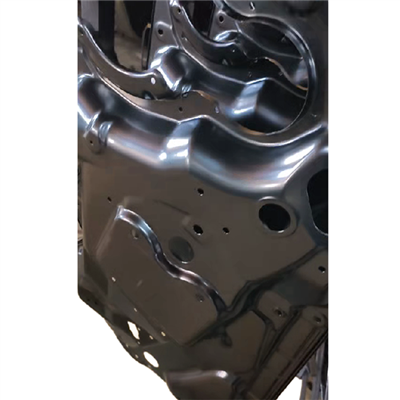
In the automotive industry, water borne coatings are widely used for anti - corrosion protection. Cars are exposed to various environmental conditions, including rain, snow, and road salt, which can cause corrosion. Water borne coatings, such as Cationic Epoxy Electrocoat, provide excellent anti - corrosion protection for car bodies. They are applied using an electrocoating process, which ensures a uniform and high - quality coating.
Marine Industry
The marine environment is highly corrosive, with saltwater, humidity, and oxygen all contributing to corrosion. Water borne coatings are used to protect ships, offshore platforms, and other marine structures. Water Based Waterproof Paint is often used to provide a waterproof and anti - corrosion barrier on the hulls of ships. These coatings can withstand the harsh marine environment and prevent corrosion for an extended period.
Industrial Applications
In industrial settings, water borne coatings are used to protect metal equipment and structures from corrosion. Water Based Industrial Paint is commonly used in factories, power plants, and other industrial facilities. These coatings can protect against corrosion caused by chemicals, heat, and other industrial pollutants.
Advantages of Using Water Borne Coatings for Anti - Corrosion
Environmental Friendliness
One of the main advantages of water borne coatings is their environmental friendliness. They have lower volatile organic compound (VOC) emissions compared to traditional solvent - based coatings. This makes them a more sustainable choice, as they contribute less to air pollution and have a lower impact on human health.
Ease of Application
Water borne coatings are generally easier to apply than solvent - based coatings. They can be applied using various methods, such as spraying, brushing, or dipping. They also dry faster, which reduces the overall production time.
Cost - Effectiveness
In the long run, water borne coatings can be more cost - effective. Their anti - corrosion properties can extend the lifespan of the coated objects, reducing the need for frequent repairs and replacements. Additionally, their lower VOC emissions may result in lower regulatory compliance costs.


Conclusion
The anti - corrosion property of water borne coatings is a result of multiple mechanisms, including barrier protection, inhibitive action, and cathodic protection. These coatings offer significant advantages in terms of environmental friendliness, ease of application, and cost - effectiveness. They are widely used in various industries, such as automotive, marine, and industrial applications.
If you are looking for high - quality water borne coatings with excellent anti - corrosion properties, we are here to help. Our team of experts can provide you with the right solutions for your specific needs. Contact us to start a procurement discussion and find out how our water borne coatings can protect your assets from corrosion.
References
- P. K. T. Oldring, “Water - Borne Coatings,” John Wiley & Sons, 2001.
- M. R. Bhosle, “Corrosion and its Control,” Narosa Publishing House, 2006.
- R. A. Cottis, “Corrosion Prevention and Protection,” Woodhead Publishing, 2013.